Future Lab: Earth Day 2011 – Curbing the Carbon Footprint of Data Centers
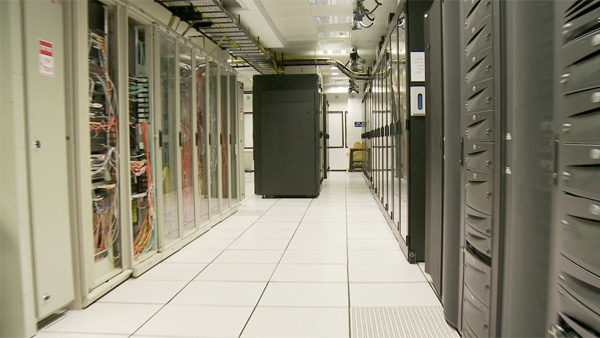
As computing power increases and we all rely increasingly on cloud computing and storage, the environmental demands of information technology are growing significantly. Earth Day 2011 marks a moment when, by some estimates, the carbon footprint of data centers exceeds that of the airline industry (an Environmental Protection Agency estimate suggests this will happen by next year). The EPA’s Industrial Technologies Program is working with industry to reduce U.S. data centers’ total energy consumption. U.C. Berkeley Professor of Mechanical Engineering Van Carey’s work in energy conversion and transport processes, along with research by Intel’s Guy AlLee, is helping to make the business of data storage significantly more energy efficient.
The growth of cloud computing and Web-based computing helps to explain the levels of energy required for data storage. New data centers operated by the big players in Internet computing – companies like Facebook and Google – operate on 40 megawatts. That’s enough power for 16-thousand homes. Data centers already cost the U.S. more than $9 billion each year. This means that even incremental improvements in efficiency will have a sizable impact.
As Intel’s AlLee explains to Future Lab, one of the ways that energy is lost in data centers is through multiple conversions — centers ultimately lose as much as half the power that comes into the center in these processes. His work on technologies to reduce the number of conversions translates to an energy savings of about 12 percent at the rack level. “Efficiencies multiply,” he says. Ultimately, those savings could amount to as much as a 28-percent decrease. Across the industry, of course, this is a significant development.
Other industry changes, noted by E-Merge Alliance Chair Brian Patterson, will be important in adding to global energy savings. For example, new designs incorporating green computing include reduced reliance on chillers, and other fairly simple changes at the practice level. Facebook’s new Oregon data center, IBM’s self-contained modular units, and other innovations also have a positive impact on increasing industry efficiency.
Add to these innovations the many other changes in solar and wind power generation, increased use of innovations in microgram technologies, and the availability of helpful personal computing tips for saving energy (and money), and there’s some good news in the IT world’s response to the demands that Earth Day helps to mark each year.
Additional information:
Van Carey, Professor of Mechanical Engineering at U.C. Berkeley
Guy AlLee, Senior Researcher at Intel’s Energy Systems Research Center in New Mexico
Brian Patterson, Alliance Chair, E-Merge Alliance
Posted in:
Audio Podcast, Cloud Computing, data centers, Future Lab Radio, Intel, Intel Free Press, Research@Intel