Future Lab: Visual Computing Lab

January 31st, 2011 |
Image for FaceBook
Download Audio FileRight click here to download audio | Share The Connected Social Media Player


Future Lab radio is sponsored by Intel Labs and is available on Intel Free Press and through iTunes.
 

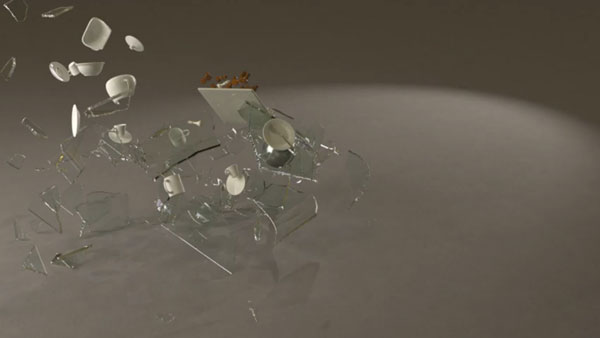
Intel’s new visual computing lab is researching how to create immersive experiences with computers. Parallel processing is opening the doors to the ability to synthesize images and audio which look and sound real. Here is Intel’s announcement of the new visual computing lab and the new Science and Technology Centers.

Interviewees:
Doug James, Associate Professor, Department of Computer Science, Cornell University

Pat Hanrahan, Canon USA, Professor, Stanford University,
John Owens, Associate Professor of Electrical and Computer Engineering at U.C. Davis

White Papers:
Doug James’ Harmonic Fluids project
Doug James’ research projects

Demos:
Rigid Body Fracture Sound
The sound of Inception

Share

Related posts:

  1. Future Lab: Cloud Gaming Gaming fans are eagerly awaiting the arrival of “cloud gaming,” with its promise of mobile, low-end devices running intense, realistic graphics at amazing speeds. Technological developments from leading scientists, combined with newsmaking marketplace competition (well-covered by Dean Takahashi), are bringing...
  2. Future Lab: Cloud Computing Research Open Cirrus, a test bed for cloud computing (spearheaded by the companies HP, Intel and Yahoo, and including research partners such as Carnegie Mellon University and the University of Illinois) recently announced its expansion. An Internet service such as Facebook...
  3. Stanford University – Office of Technology Licensing (OTL) Stanford University’s Office of Technology Licensing (OTL) is one of the country’s most active offices in the field of technology transfer from university to industry. Their staff, most of whom are professionals engaged directly in licensing, manages over 2,500 active...
  4. Future Lab: 3D Molecular Visualization Advances in interactive molecular graphics enable not only creative research, but an increasingly collaborative and mobile research community to interact. In the “VIsualization Vault,” at the University of California, San Francisco, Professor Tom Ferrin and his team created Chimera, a...
  5. Future Lab: The Brain Computer Interface and mind reading technology Researchers are developing technologies that will eventually allow users to control devices like computers, televisions and cell phones with their thoughts. Scientists have created Brain Computer Interface, also known as “BCI,” technology that allows computer programs to interpret human intentions...

Posted in: Audio Podcast, Future Lab Radio, Intel, Intel Free Press, Intel Labs, Research@Intel

Tags: , , , , , , , , , , , , , ,

*