 |
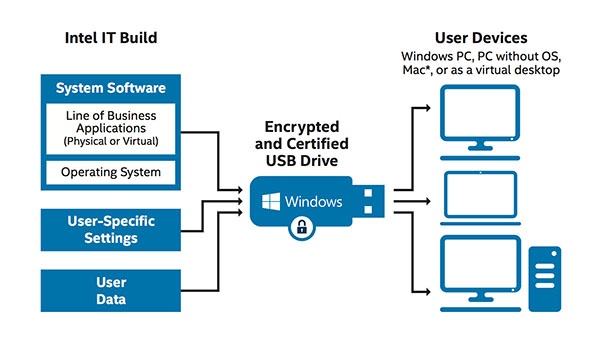
IT Best Practices: Intel IT supports a variety of provisional and external workers and contractors who access Intel resources for collaboration and productivity. Providing Intel-deployed PCs is not always an ideal option. Some of these workers require higher levels [See the full post…] |
 Read/Download PDF Read/Download PDF
|
|
Categories: Information Technology, Intel, Intel IT, IT White Papers, IT@Intel Tags: bring your own device, BYOD, information technology, Intel, Intel IT, IT Best Practices, IT Business Value, IT Whitepaper, IT@Intel, pdf, remote access, Secure Access, USB operating system, USB OS, Windows To Go
Categories: Audio Podcast, Information Technology, Inside IT, Intel, Intel IT, IT@Intel Tags: Aideen Prendergast, Android, Audio Podcast, automation, bring your own device, BYOD, email, information technology, innovation, Inside IT, Intel, Intel IT, IT Best Practices, IT Business Value, IT@Intel
Categories: Audio Podcast, Cloud Computing, Corporate, Intel, Intel Chip Chat, Security Tags: Allyson Klein, bring your own device, BYOD, Chip Chat, Cloud Computing, data center, HP, HPE, Intel, Loretta Nierat, McAfee, podcast, Security
Categories: Business Solutions for IT Managers, Information Technology, Intel, IT White Papers Tags: bring your own device, Business Solutions for IT Managers, BYOD, Generation Y, Gibraltar Solutions, Intel, Intel Xeon Processors, IT Best Practices, IT Business Value, IT Whitepaper, pdf
|
IT Best Practices: Intel IT is proactively implementing a bring-your-own-device (BYOD) program that allows employees the flexibility to use personally owned devices like smartphones and tablets to connect to the corporate network for some IT services. While this presents [See the full post…] |
|
Read/Download PDF
|
|
Categories: Corporate, Information Technology, Intel, Intel IT, IT White Papers, IT@Intel, Security Tags: bring your own device, BYOD, consumerization, Cyber Risk Management, data recovery, eDiscovery, electronic discovery, Intel IT, IT Best Practices, IT Business Value, it leadership, IT management, it operations, IT Strategic Planning, IT@Intel, SFF, small form factor devices, storage architecture
Categories: Audio Podcast, Information Technology, Inside IT, Intel, Intel IT, IT@Intel Tags: Aideen Moohan, Audio Podcast, bring your own device, BYO, BYOD, Corporate, Derek Harkin, IA-based smartphones, information technology, Inside IT, Intel architecture, Intel IT, IT Best Practices, IT Business Value, IT infrastructure, IT@Intel, smartphone
|
IT Best Practices: Intel IT is proactively implementing a bring-your-own-device (BYOD) program that allows employees the flexibility to use personally owned devices like smartphones and tablets to connect to the corporate network for some IT services. While this presents [See the full post…] |
|
Read/Download PDF
|
|
Categories: Information Technology, Intel, Intel IT, IT White Papers, IT@Intel, Technology Tags: bring your own device, BYOD, consumerization, data recovery, eDiscovery, electronic discovery, Intel IT, IT Best Practices, it leadership, IT management, it operations, IT Strategic Planning, IT@Intel, SFF, small form factor devices, storage architecture
|
IT Best Practices: Intel IT is proactively implementing a bring-your-own-device (BYOD) program that allows employees the flexibility to use personally owned devices like smartphones and tablets to connect to the corporate network for some IT services. While this presents [See the full post…] |
|
Read/Download PDF
|
|
Categories: Information Technology, Intel, Intel IT, IT White Papers, IT@Intel, Technology Tags: bring your own device, BYOD, consumerization, data recovery, eDiscovery, electronic discovery, Intel IT, IT Best Practices, it leadership, IT management, it operations, IT Strategic Planning, IT@Intel, SFF, small form factor devices, storage architecture
Categories: Audio Podcast, Big Data, Corporate, data centers, Inside IT, Intel, Intel IT, IT@Intel Tags: Audio Podcast, bring your own device, BYOD, client aware cloud, Corporate, eDiscovery, information technology, Inside IT, Intel architecture, Intel IT, inventory, IT Best Practices, IT Business Value, IT infrastructure, IT@Intel, Steve Watson
|
IT Best Practices: Episode 28 – It’s been amazing to watch technology converge to make the cloud possible. Connection speeds, processing power, and the explosion of connected devices all contribute to this transformation in the compute experience. It might [See the full post…] |
|
Listen/download audio
|
|
Categories: Audio Podcast, Cloud Computing, Information Technology, Inside IT, Intel, Intel IT, IT@Intel Tags: Audio Podcast, bring your own device, client aware cloud, Corporate, DougDeVetter, information technology, Inside IT, Intel architecture, Intel IT, inventory, IT Best Practices, IT Business Value, IT infrastructure, IT@Intel, RIAs, Rich Internet Applications, supply chain